



Author | Jaime Ramos
As with urban simulators such as Sim City, farming simulator games have become a phenomenon in the world of videogames. In them, the player appears as a kind of all-powerful manager who sees and controls everything, to a large extent thanks to the interconnection of functionalities on the farm. Could this scenario be extrapolated to the current primary sector just a Sim City inspired countless digital twins?
The day-to-day of a farmer is not such fun. Climate change, pests and the unstable prices they receive for their products, among other factors, condition their survival.
What is connected agriculture?
It is a sector that provides a livelihood for 40% of the world’s population and feeds the other 60%. That is why we cannot afford to let it get it left behind in terms of the benefits of existing technologies. In fact, according to the United Nations, the primary sector will need to increase its food production by 70% over the next thirty years in order to satisfy the increases in population by 2050.It is a hidden challenge that requires smart agriculture. Within this smart agriculture, which also involves urban spaces, the so-called connected farms will be the next revolution.The aim of a connected farm is to apply existing telecommunications technologies to increase the control over the farming facilities, which in turn will result in more efficient farm management.
How does agriculture implement the Internet of Things?

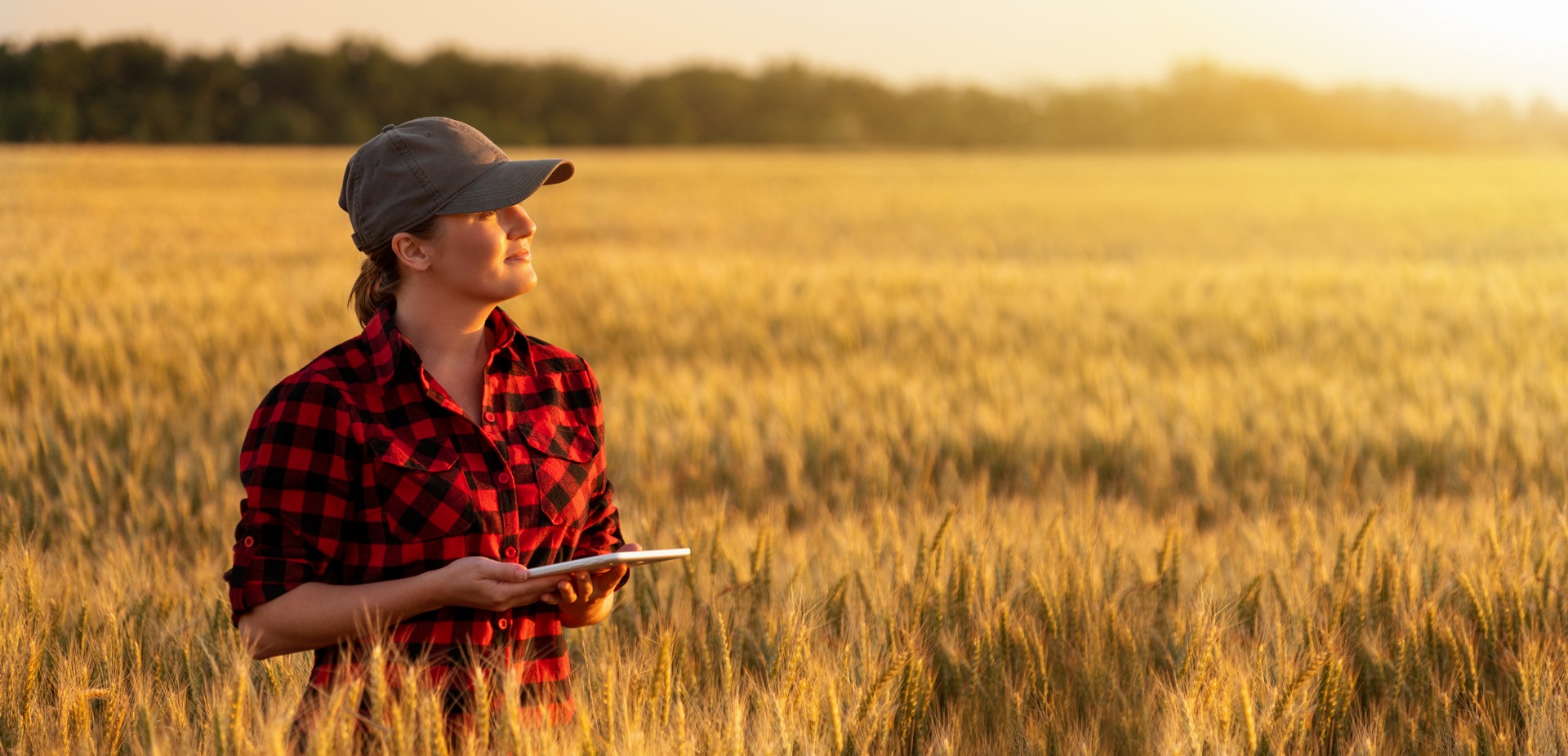
The connected farm is largely based on the Internet of Things (IoT). By installing sensors in the farm infrastructure, a farmer can digitally check factors that once required specific skills or were quite simply impossible to anticipate.
These tools enable pests or animal diseases to be controlled, crops or livestock to be monitored, or breeding or irrigation system requirements to be managed more accurately. There are also smart spraying systems now that are capable of distinguishing between crops or weeds and machinery and robots that operate autonomously.
The use of algorithms and analytical instruments are also enabling resources to be used to their full potential.
How does technology affect crops? Advantages and disadvantages

The new farming interconnection networks are full of advantages and some disadvantages.
• Water savings.• Improved productivity, cost reduction and capacity to offer more competitive prices.• Unique climate information: levels of solar radiation, humidity, rain, etc.• Weather alerts such as frost detectors with notifications to anticipate meteorological phenomena.• Reduction of agricultural emissions.• Remote process management.• Greater crop health management.• Harvest mapping.• Inventory precision.
On the other hand, the digitalization of agriculture involves a complex investment. Not just because of “how expensive” it is. It can favor certain discriminations between countries or different areas of the world that do not have access to these technologies.
Are there any alternatives? Not many, to be honest. Connectivity is a powerful factor in economic terms. According to the McKinsey Center for Advanced Connectivity, if connectivity is successfully integrated in agriculture, the value of global production would increase by $500 billion.
To achieve this, an unprecedented digital deployment is required, which is not an easy task, particularly in terms of telecommunications. Therefore, despite the undeniable advantages of these technologies, consolidating the connected farm will not be child’s play.
Images | iStock/Ekkasit919, iStock/Blue Planet Studio, iStock/vitpho, iStock/Scharfsinn86