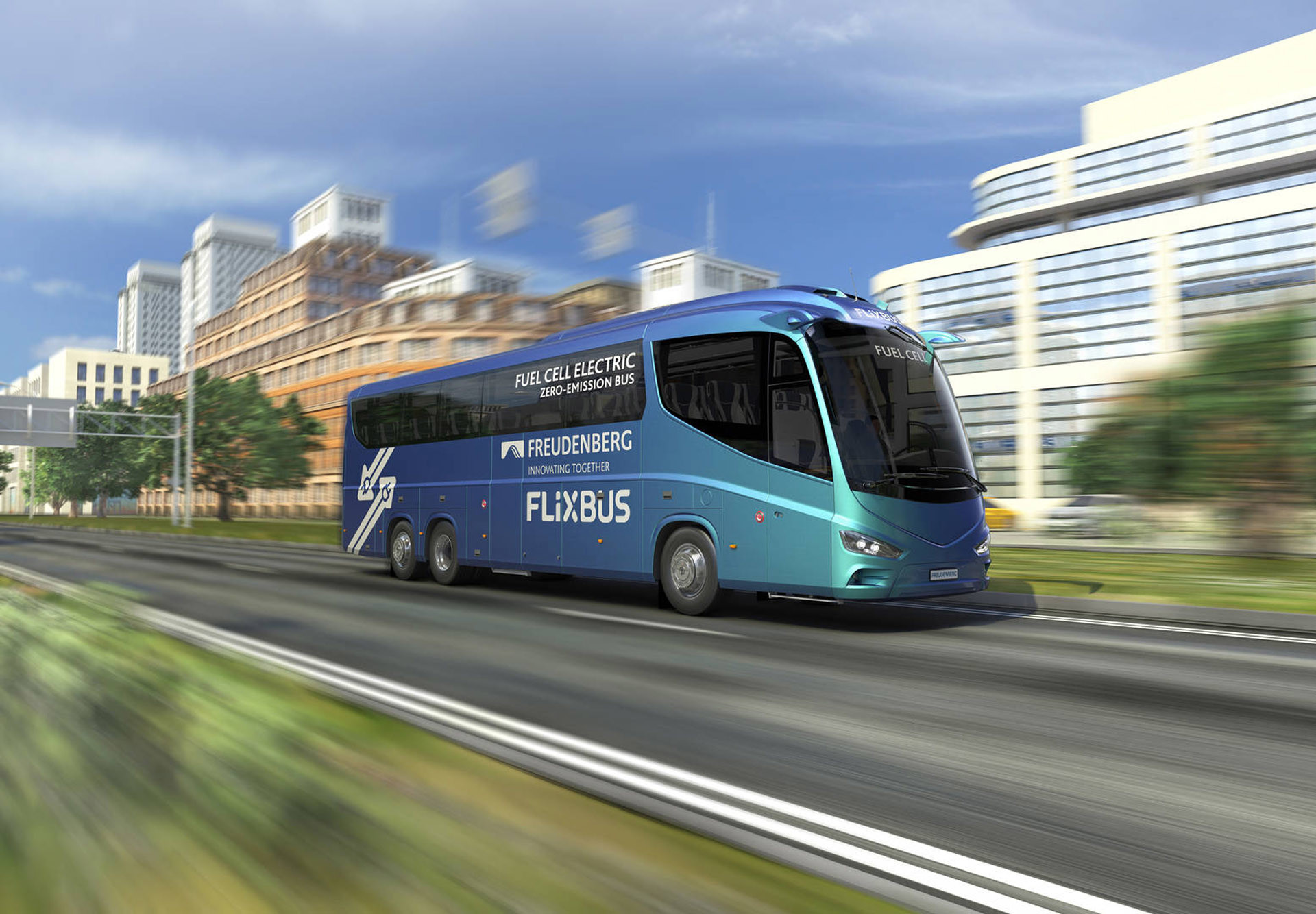




Author | Patricia M. LicerasFlixBus, Europe’s largest long-distance road transport operator, wants to take sustainable mobility one step further through buses. It will test vehicles powered by hydrogen fuel batteries for long distances, becoming the first company in the world to do so. In order to bring the project to life, the company, whose parent company is the German mobility provider FlixMobility, is in conversations with bus manufacturers and is working with technology experts from the German firm, Freudenberg Sealing Technologies.“Following the successful launch of three electric long-distance buses, we now want to develop the first long-distance bus with fuel cell drive together with Freudenberg and set another milestone in the history of mobility”, indicated Fabian Stenger, managing director of FlixBus DACH. In 2018, the company presented the first fully electric regular long-distance bus lines, which initially hit the roads in France and then also in Germany.Hydrogen is set to become one of the fuels of the future. A possible substitute of petrol or diesel, it is considered to be an alternative to plug-in electric vehicles, which have less autonomy compared to conventional vehicles and depend on a supply network which, among other aspects, are hindering its mass implementation in the short term. Having said this, the recharging infrastructure for hydrogen vehicles is still in the very early stages compared to electric vehicles. Germany is the EU country that is investing the most in this area, with over 75 hydrogen filling stations and another 45 being created, according to figures from the website H2.live. Figures are increasing in other European countries, but at a slower rate.
The same performance without emissions
 Fuel cell vehicles produce their own electricity. To do so they make the hydrogen transported in its tank react with oxygen. The resulting reaction between the atmospheric oxygen and the hydrogen produced in special cells, generates electricity, solely releasing water into the atmosphere in the form of vapour. It is therefore a zero-emission system.The electricity is stored in a battery and is used to make the vehicle’s electric motors work. At lower speeds, the vehicle will move by obtaining energy only from the battery, but on roads the fuel cell will provide the motor with greater power and recharge the battery, which will also use the energy generated during braking.The idea is for the FlixBus vehicles to have an autonomy of at least 500 kilometres before refilling with hydrogen. The vehicle will be charged in 20 minutes or less, which is similar to the time needed to fill a diesel fuel tank of that size, while the performance profile of these buses, such as power and acceleration, must comply with current Euro VI standards applicable to long-distance diesel-engine buses.Claus Möhlenkamp, CEO of Freudenberg Sealing Technologies said: “A hybrid system that properly combines the battery and fuel cells is especially practical for heavy vehicles that cover long distances since purely electric vehicles still do not have the ability to cover long distances”In the initial phase of the project, a representative fleet of 30 buses will be equipped with this technology as pilot test.It will still be some time before the first hydrogen fuel cell bus is seen on European roads, but the aim of the initiative, according to its creators, is for this technology to reach maturity on the market and eventually contribute to significantly reducing CO2 emissions into the atmosphere.Images | Freudenberg Sealing Technologies