



Author | Jaime Ramos
Public charging is considered to be one of the classic obstacles for the development of electric mobility. Are there not enough charging points because there are not enough electric cars or are there not more electric cars on the road because we do not have the appropriate charging infrastructures? The balance seems to swing towards the latter.
Soon only electric cars will be sold
Electric cars are here to stay and that is a fact, not just because of the number of registrations or the market share. The roadmap of the main manufacturers has changed, in order to adapt their offer to zero-emissions with a view to the next decade.
The relevant question in the sector is when will companies stop selling combustion powered vehicles . The first that can afford this luxury are premium car manufacturers. Two examples of this are Volvo, which will do so in 2030 and Audi a few years later with the gradual reduction of its combustion engine cars.
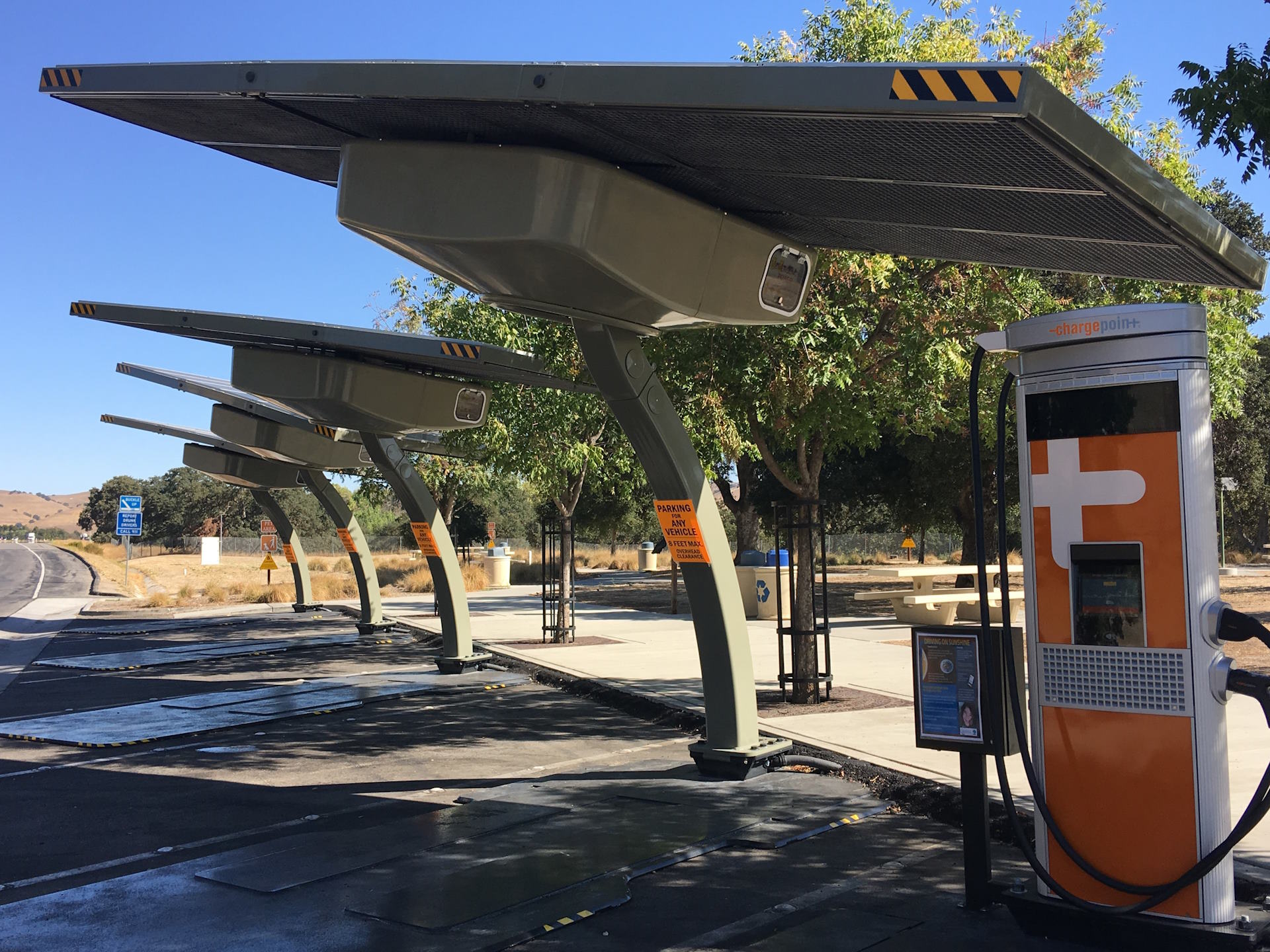
This reality contrasts with the mediocre deployment of the charging network in most markets. To date, the sector’s hopes were based on private or domestic charging. If the expectations are to become a reality, the much-awaited deployment of public charging networks will be essential.
How and where are electric cars charged?

An electric car can be plugged into any socket. The problem is the power and charging times, which has increased as the energy capacity of batteries has increased.
If not so long ago batteries for 100% electric vehicles barely reached 20 kWh, the most recent models now have a battery capacity of between 50 kWh and 80 kWh, and even 100 kWh. This means the main aim of public charging is to achieve relatively fast charging, which requires a technology that comes at an extremely high price. Given this situation, companies such as Tesla are adapting their private network to deliver up to 300 kW of power.
The objectives include covering this technological lapse in which electric models will still not be able to cover large distances. The sector, therefore, requires an upgrade and technological adaptability which, to say the very least, is lagging behind.
The countries most interested in electric mobility are trying to accelerate the deployment through multimillion dollar investments. In the United Kingdom, the Climate Change Committee estimates that 1,170 charging stations for every 100 kilometers will be needed in 2030 to cover the needs of electric vehicle drivers. There is a long way to go to fulfil this goal.
Why are there so few on-street charging points for electric cars?

The public charging infrastructure is facing a series of new challenges without having resolved the ones it was already tackling.
Network adaptability
The sector is debating whether to retrofit old chargers or install charging points with the latest power and intelligence features. Companies such as Charge Up Europe have set out the many disadvantages of refurbishing the charging stations to adapt to the new circumstances and they propose starting from scratch. Furthermore, there are also technical impediments in terms of integrating the chargers in the different locations, particularly in urban spaces.
Different standards of fast charging
To date, charging is differentiated based on the type of connector compatible with each car. This depends on the manufacturer and the region of the world. Defenders of electric vehicles have been demanding a unified standard of fast charging for years, so that new stations do not have to be developed with several types of connectors.
Service unification
Another unification that has been in the making for years. It depends on who provides the service: public entities, private businesses or charging managers. This determines whether drivers have to subscribe in order to obtain access credentials or even the final price for charging their cars.
Maintenance of charging stations
Another pressing factor and also related to retrofitting. The problems regarding the maintenance of the infrastructure have increased. In California, which is the main electric vehicle market in the USA, one in four charging points is inoperative. There is also an apparent lack of training and professionals at a global level.
Lack of components and price of precious metals
The deceleration of the installation of charging points since the pandemic is due to the global shortage of essential components and the price of metals such as lithium. These two global phenomena are also resulting in an increase in costs, which were already high, for putting fast charging stations in operation.
All these factors require, as a starting point, a consensus between the numerous electric mobility stakeholders with a view to sharing common criteria. Only then will they be able to take advantage of the investment and cover the exponential number of electric models that are already on our roads.
Images | Freepik/ frimufilms, Ionity, Freepik/user6702303