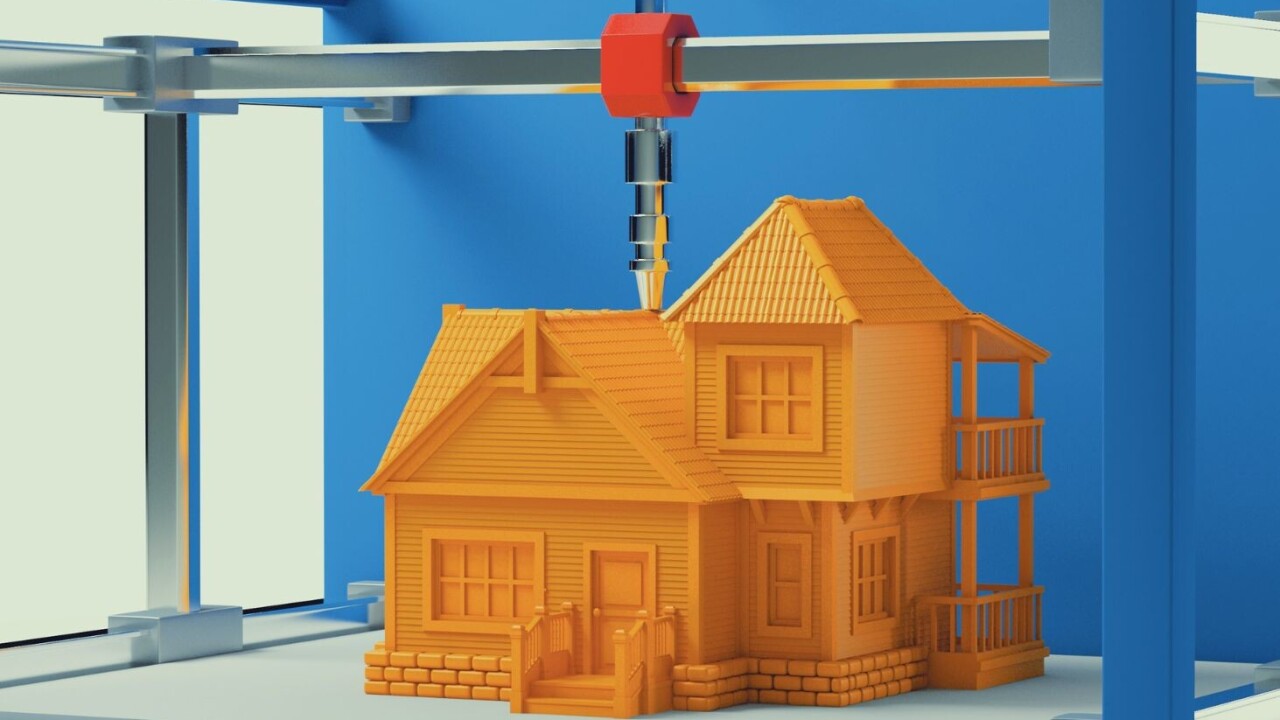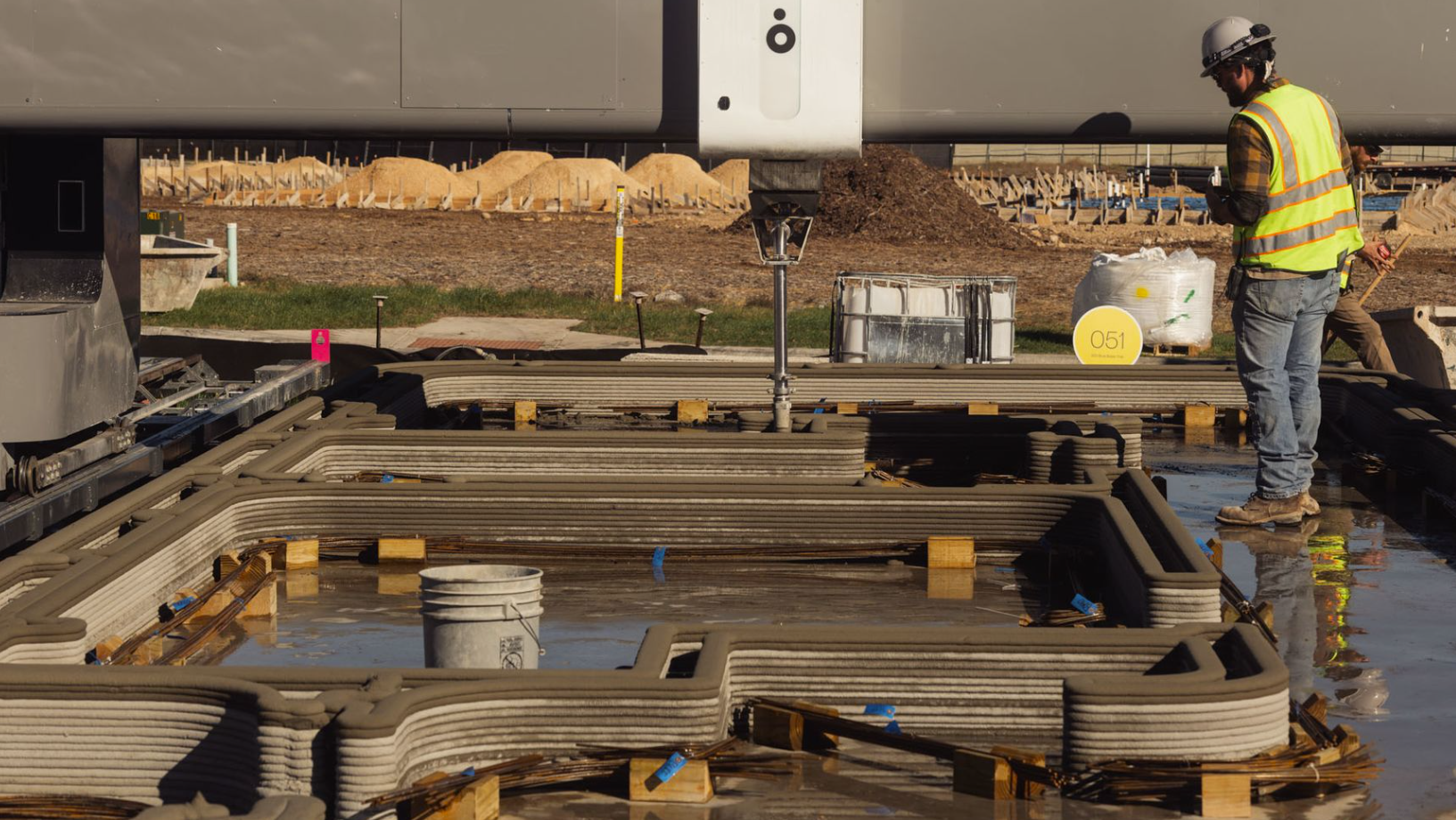




Author | Jaime Ramos3D printing is one of the most important technological advances in terms of revolutionising the economy and even our own lives this century, since there are very few manufactured products that cannot be printed. In fact, houses can now be designed and built thanks to the innovation of 3D printers.Architecture and the construction industry are preparing to tackle the impact of 3D printing on their way of working. Today, there are numerous 3D urban development projects which, as experiments, are working on the dream of building houses with negligible budgets and in very little time. This could therefore be a possible turning point in terms of planning.
How much would a 3D printed house cost?
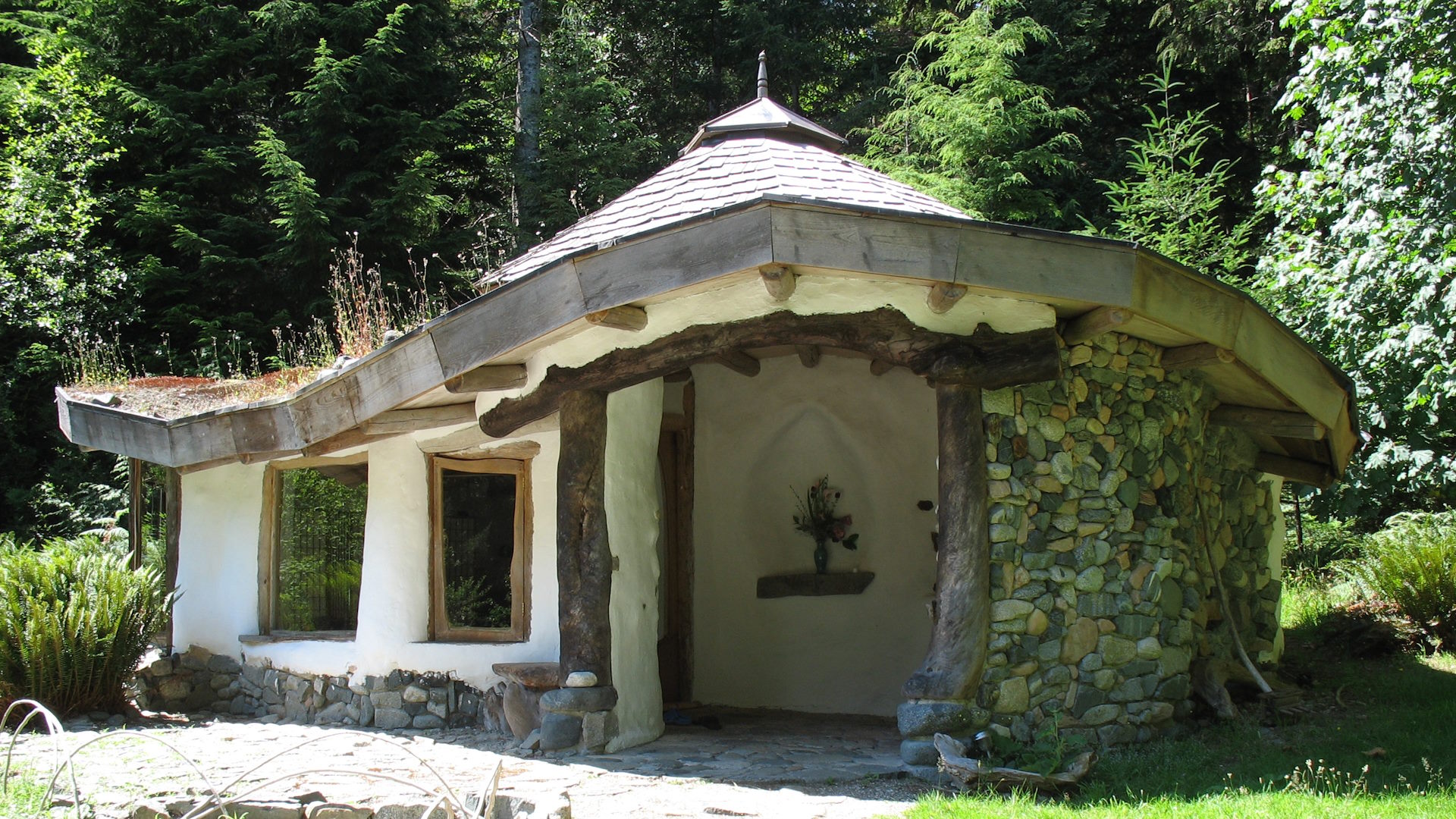
Plenty of companies are already getting ready for the adventure. The projects have a common denominator: the low final price of the property. In the United States, you can find them for around 10,000 dollars. In Europe, specifically in Italy, there are already 3D printer companies such as Wasp. This firm completed an architectural project last year that focused particularly on sustainability. Christened as “the mud house”, its architects proved that materials obtained from the land can be used to build a 3D-printed eco-house. The materials cost 900 euros and it took 10 days to build the house. The Wasp house served to develop and promote at a commercial level a new printer capable of printing on an architectural scale.To do so, they had to perfect the technology used in the printing, to enable the use of the materials from the chosen plot. The fundamental aim of using 3D printers is, in this specific case, to reduce the environmental impact. These types of projects can also be found in Spain. In 2018, the first 3D house was built by the company Be More 3D and the Polytechnic University of Valencia.https://youtu.be/KPaOCWrZJ94
A back-up for architectural heritage
The advantages of combining architecture and 3D printing also apply to the area of restoring architectural monuments. Notre Dame, after the devastating fire, is a perfect example of how technology can be used to help restore the monument.This is a reverse printing process, by taking a real building and creating a digital 3D replica to allow it to be rebuilt. In the case of the Paris cathedral, in 2015, the historian, Andrew Tallon, used this 3D scanning technology. This technology has given great hope for Notre-Dame, but also for countless other architectural gems that could be affected by fires or natural disasters.Having highly reliable 3D models could be of great help in the reconstruction of these buildings, staying faithful to the original design while using potentially more efficient construction techniques.
3D urban planning, a new sector
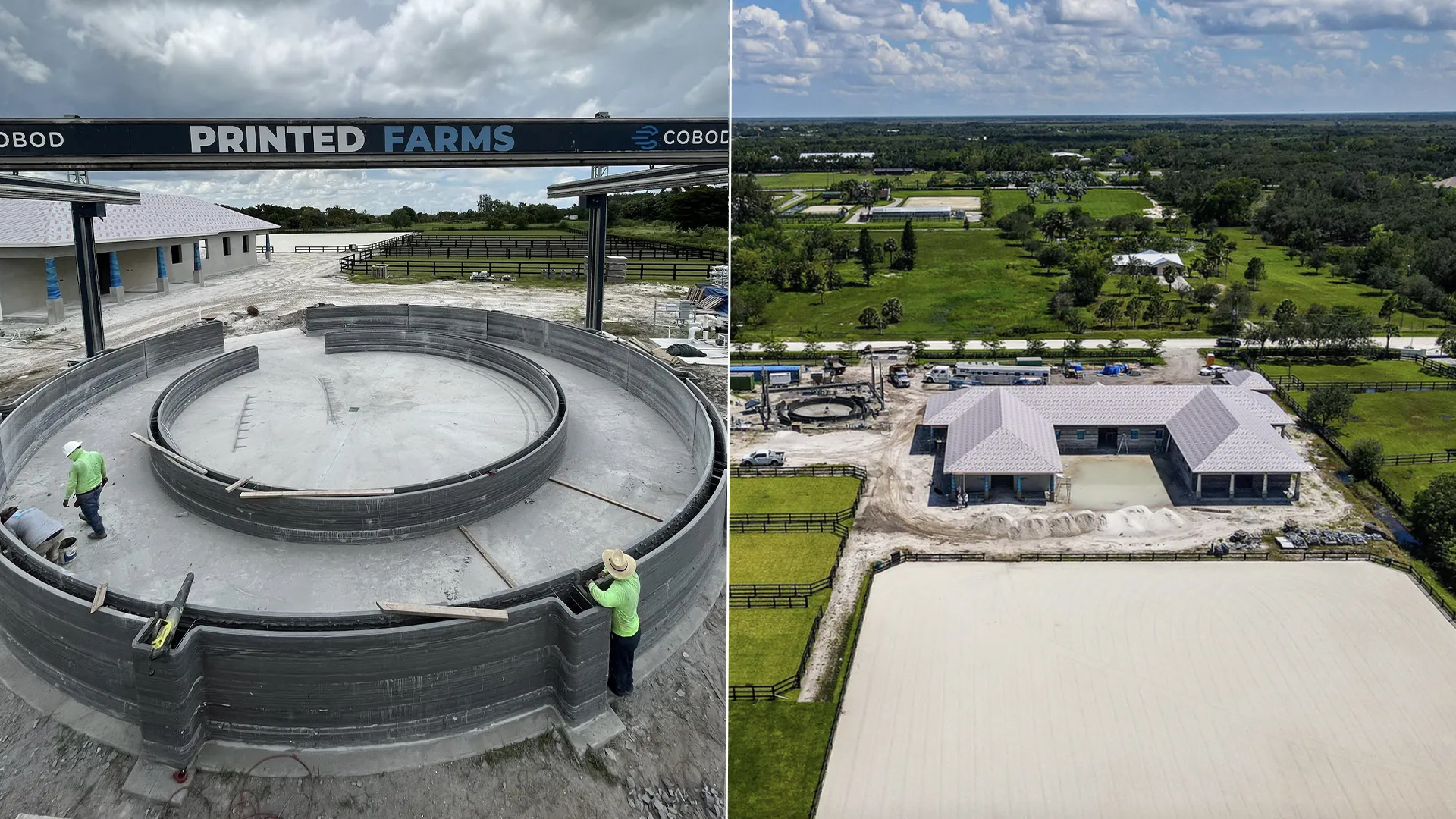
 As illustrated, there is already an architectural sector focused on the development of 3D printers. Numerous companies now have branches dedicated to this activity and the results have soon been revealed. The Danish company COBOD, for example, recently unveiled its BOD2 model, capable of “building” at a speed of 100 centimetres per second.The most densely populated cities in the world could use these features to address some of their most pressing problems, such as improving the quality of deteriorated properties or providing housing for homeless people. Solutions of this type would also help improve conditions for refugees, providing them with spaces that would guarantee the protection of their rights.The New Story Project, also focusing on building with 3D printing technology, also seeks to fulfil this objective. This agency estimates that 3,000 people will not have access to decent housing in 2050. This represents a 200% increase with regard to current figures.This challenge concerns all of us and it is hard to ignore it. However, we also need to resolve an equally important disadvantage: How will this technology affect the construction sector? Given the economic dependency of many countries, 3D printers could mean workers are left out of a job. At the very least, we should consider all the consequences and apply the technology in a sensible manner.Images | gorodenkoff, SeventyFour y cybrain